
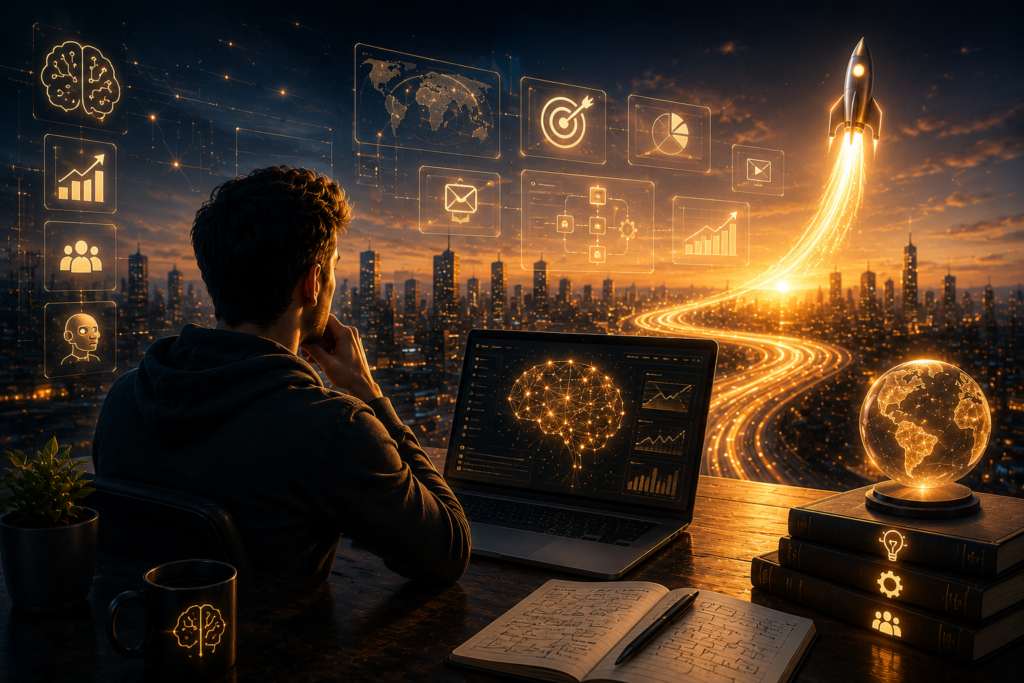
Why the Next Generation of Business Owners Will Operate Completely Differently
Something unusual is happening in entrepreneurship right now.
Quietly.
Without most people fully realizing it yet.
A new generation of entrepreneurs is beginning to emerge — not built around traditional business models, but around:
- AI systems,
- automation,
- digital leverage,
- scalable content,
- and intelligent workflows.
And honestly?
The gap between these entrepreneurs and traditional businesses is starting to widen very quickly.
Because while many companies are still operating manually behind the scenes…
AI-powered entrepreneurs are building businesses designed to move at internet speed.
A few years ago, launching a serious business online usually required enormous resources.
You needed:
- teams,
- software,
- designers,
- marketers,
- assistants,
- and constant manual effort just to stay competitive.
Even small operations became overwhelming quickly.
One product launch could take weeks.
One content strategy could burn out an entire team.
One marketing campaign required endless moving parts.
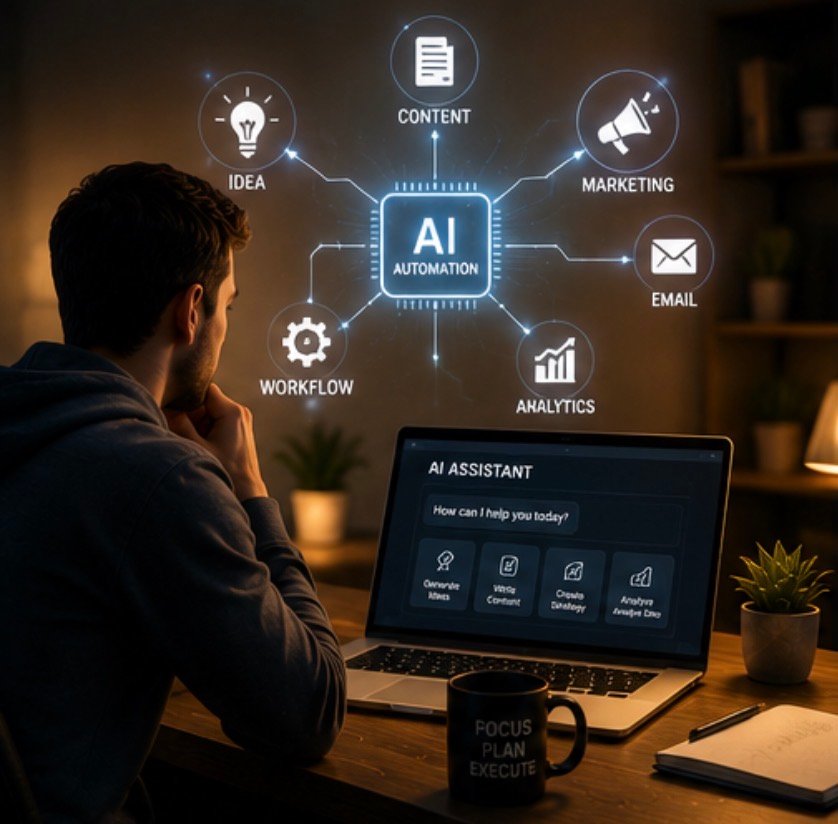
That created a hidden problem most entrepreneurs quietly struggled with:
⚡ operational exhaustion.
The business technically existed…
but growth depended entirely on constant human effort.
That model is beginning to change.
The rise of AI-powered entrepreneurs is not happening because AI magically creates success.
That’s the misconception.
The real shift is happening because AI dramatically increases:
🚀 leverage.
And leverage changes entrepreneurship completely.
Instead of spending hours brainstorming content ideas, entrepreneurs can now generate frameworks, headlines, SEO structures, and marketing angles in minutes.
Instead of manually organizing operations, workflows can automate repetitive processes behind the scenes.
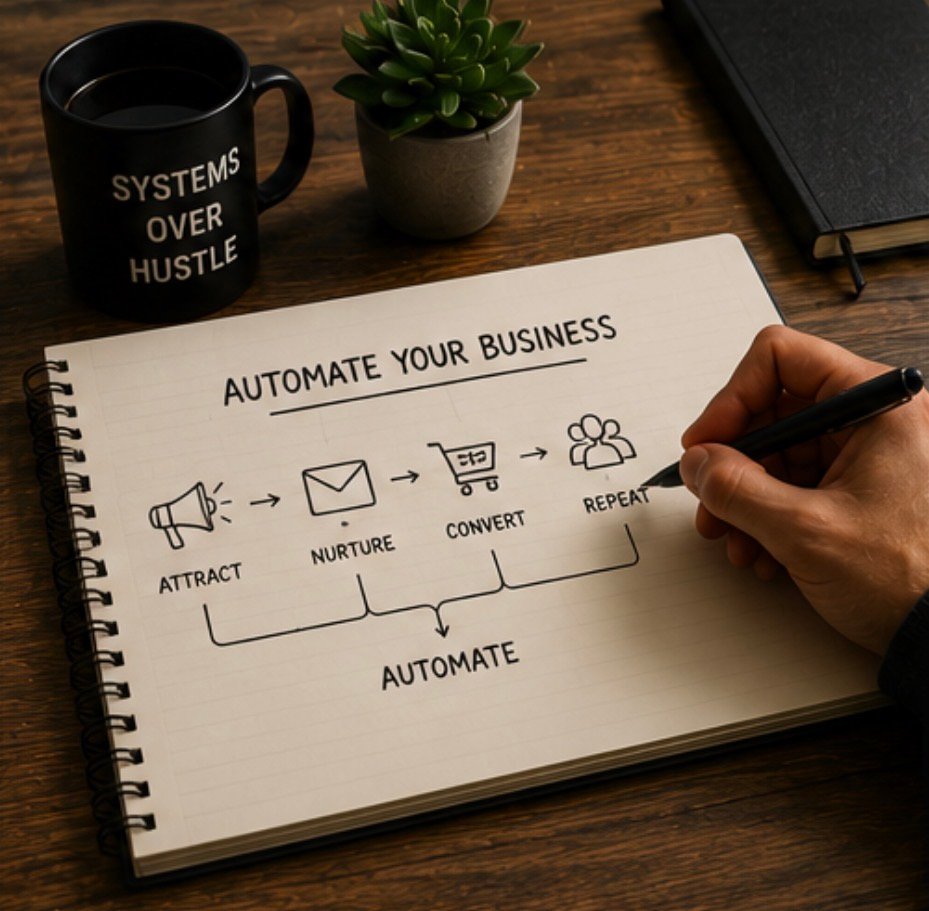
Instead of building isolated pieces of content, AI entrepreneurs are creating interconnected systems where:
- blogs feed social media,
- social media feeds email lists,
- email lists feed products,
- and products build scalable audiences.
That creates momentum most businesses never achieve manually.
One of the biggest advantages AI-powered entrepreneurs have right now is speed.
The internet rewards businesses capable of:
- adapting quickly,
- publishing consistently,
- testing ideas rapidly,
- and staying visible continuously.
AI dramatically increases that ability.
A single entrepreneur can now:
- create branding,
- launch websites,
- build workflows,
- automate communication,
- generate marketing assets,
- and test business ideas
faster than ever before.
That lowers the barrier between:
ideas
and
execution.
And in business, execution speed often determines who captures opportunities first.
What makes this moment especially important is that most businesses are still early.
Very early.
A huge percentage of companies are still operating with:
- outdated systems,
- slow communication,
- inconsistent marketing,
- scattered workflows,
- and manual operations.
That creates massive opportunities for entrepreneurs building AI-powered systems right now.
Because businesses are increasingly looking for:
- efficiency,
- scalability,
- automation,
- consistency,
- and operational leverage.
The entrepreneurs capable of solving those problems are positioning themselves extremely well for the future.
At the same time, content creation is becoming one of the biggest advantages AI entrepreneurs possess.
For years, content consistency was one of the hardest parts of online business.
Most entrepreneurs understood they needed:
- blogs,
- videos,
- social posts,
- emails,
- and SEO content
to stay visible online.
The problem was sustainability.
Eventually, content creation became overwhelming because every piece required manual effort repeatedly.
AI changes that equation dramatically.
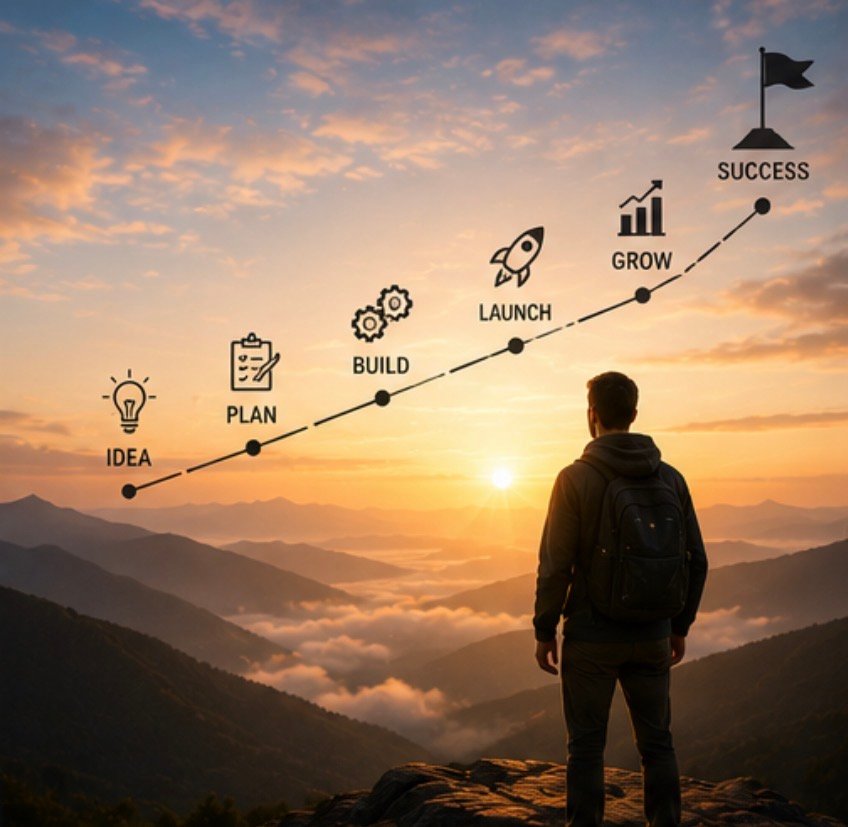
The smartest entrepreneurs are no longer creating random content.
They’re building:
🌍 content ecosystems.
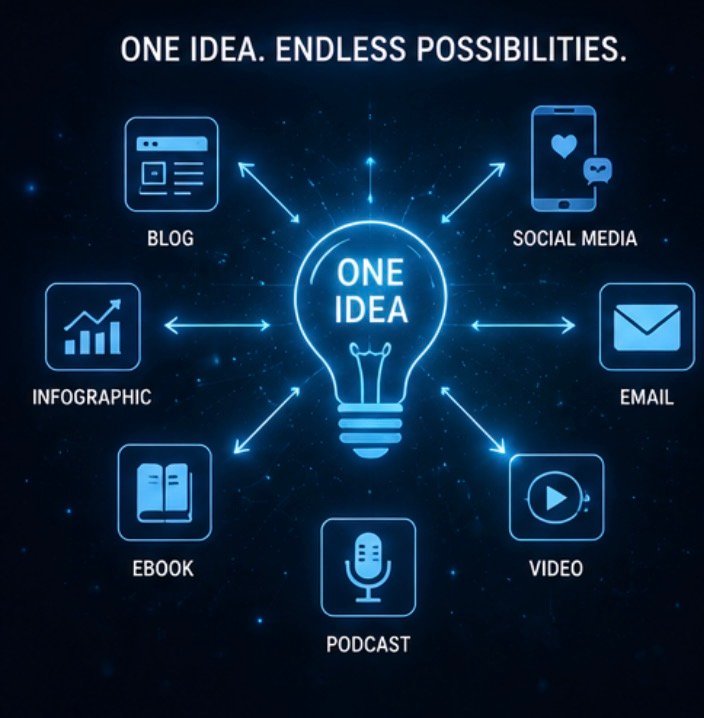
One blog post can now become:
a Reel,
multiple captions,
an email newsletter,
Pinterest graphics,
lead magnets,
and future product ideas.
That creates something incredibly valuable online:
compounding visibility.
And visibility compounds much faster than most people realize.
Another hidden shift happening right now is that AI entrepreneurs are increasingly building:
⚡ digital infrastructure
instead of simply “businesses.”
That’s a major difference.
Traditional entrepreneurship often depends heavily on:
- active labor,
- constant management,
- and direct involvement.
AI-powered entrepreneurship increasingly revolves around:
- workflows,
- systems,
- automations,
- digital assets,
- and scalable operations.

That changes the economics of growth completely.
Because systems scale differently than manual effort.
Ironically, most people are still underestimating how early this transition really is.
Many entrepreneurs are casually experimenting with AI…
without actually building infrastructure around it.
They generate a few captions.
Test random tools.
Watch endless tutorials.
But they never create:
- systems,
- workflows,
- automation layers,
- or scalable digital ecosystems.
That’s where the real separation is starting to happen.
Because the entrepreneurs building systems around AI are positioning themselves very differently from the people simply consuming AI content passively.
And over time, that gap compounds dramatically.
The rise of AI-powered entrepreneurs is ultimately changing what entrepreneurship looks like itself.
The next generation of business owners will likely operate more like:
🚀 interconnected digital ecosystems
than traditional companies.
Where:
- content drives traffic,
- traffic builds audiences,
- audiences generate opportunities,
- automation increases scalability,
- and digital systems create leverage.
That compounding effect becomes incredibly powerful online.
Especially for entrepreneurs capable of adapting early.
This does not mean human creativity disappears.
If anything, creativity becomes even more valuable.
Because AI amplifies execution…
but entrepreneurs still need:
- vision,
- strategy,
- positioning,
- storytelling,
- and innovation.
The businesses dominating the next decade will probably not be the ones simply using AI casually.
They’ll likely be the entrepreneurs capable of combining:
🧠 human creativity
with
🤖 intelligent systems.
And honestly?
We are probably still only seeing the beginning of that shift.
